Night Diving - How to Avoid Risks?
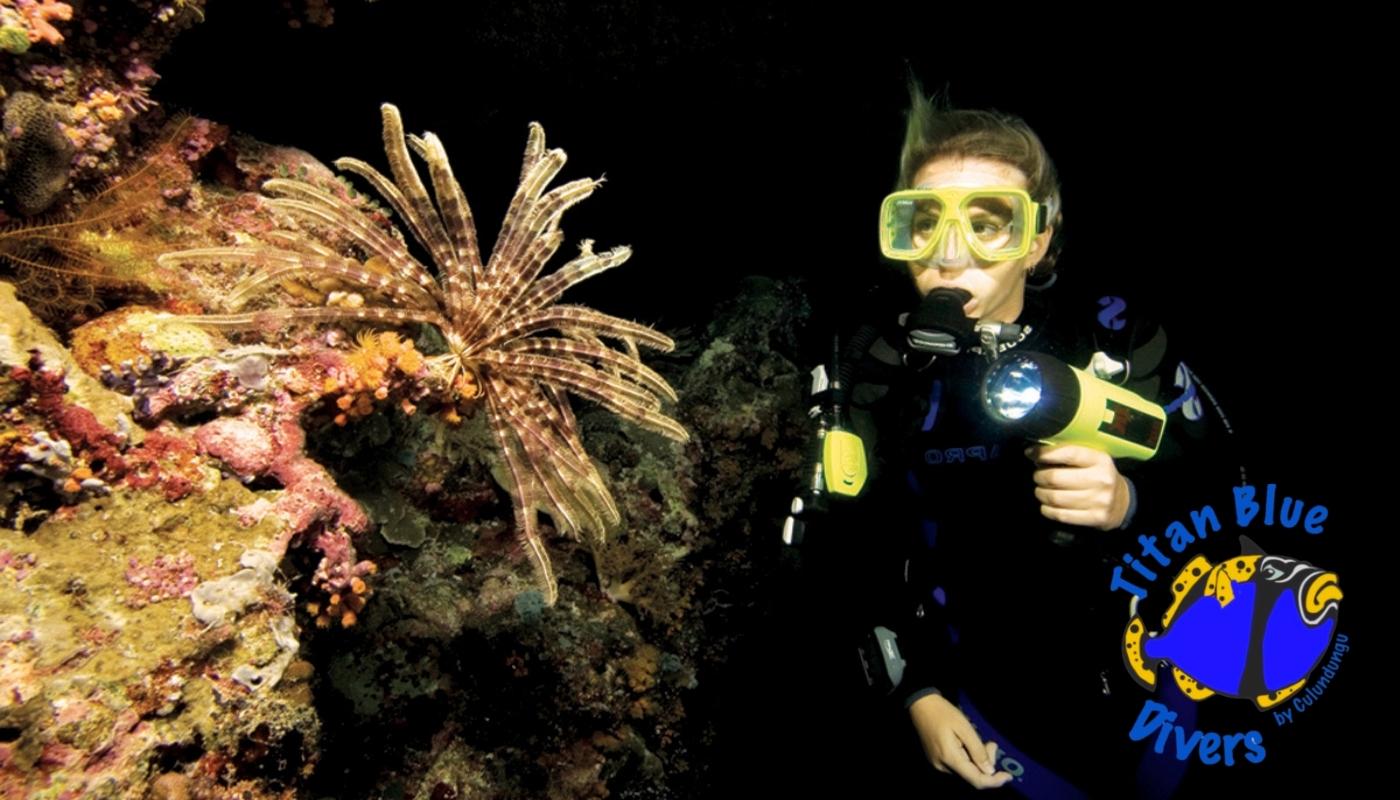
Night diving is distinguished by being practiced at times when there is little or no sunlight, i.e., before sunrise and after sunset, which allows for the study of the interesting nocturnal life of marine flora and fauna.
This opens the doors to a wonderful new world, full of unique creatures that can only be seen at night, striking colors thanks to the luminescence of some species, and shapes and sizes of all kinds. However, such a world of wonders is not without dangers and risks to be discovered, starting with the fact that humans are mostly diurnal beings and our pupils are not well adapted to the absence of light.
It is worth noting that this factor, coupled with the fact that our bodies are developed to withstand terrestrial rather than marine conditions, represents the main challenge when performing this activity. For these and more reasons, we invite you to keep reading to discover everything you need to know so you can practice night diving safely and without complications.
What Should You Consider Before Night Diving?
Before practicing night diving, it is recommended to follow these safety guidelines:
- An advanced technical diving level is required for this type of activity. However, if you don’t have it, it should preferably be done with someone who does.
- If you are new to this type of diving, it is better to start your dives during those times of day when there is still some light left. This way, you can adapt progressively.
- The equipment must be appropriate; you must ensure that the wetsuit you use is the exact size and suited to your build, weight, and physical abilities. In this post we tell you how to choose your wetsuit correctly.
- Never forget your flashlight or your backup light. Remember it will be your guide during all your night dives.
- The lack of light undoubtedly presents a series of additional risks, so these dives must necessarily be carried out in areas known to the divers and at a depth of no more than 20 meters.
- We advise you to create a buddy system and not stray from the group to avoid the risk of getting disoriented and/or lost.
- Groups should not be very large; this is to maintain better control and coordination and prevent any member from being lost from sight.
- It is of vital importance to check the weather and sea conditions to avoid difficulties during the descent and ascent.
- All divers in the group must respect the dive plan, and the area must also be protected from ships and boats by using special surface buoys to mark the perimeter.
- It is not recommended for dives to last more than 30 minutes to avoid complications with flashlights. Keep in mind that if your light source goes out, your dive is over and you could be in a risky situation.
- The support boat or shore team must know the dive plan perfectly and be alert for any alarm signals to give notice. This ensures the safety of the group that is submerged.

Tips for Safe and Risk-Free Diving
Knowing how to dive safely is vital, whether you dive during the day or at night. For that reason, we’ll leave you with some tips from our dive instructors so you can perform your dives with confidence:
- Go to a Certified Dive Center: This will not only allow you to be accompanied by professionals in the field, but you can also train with different diving courses and specialize. Learn as much as you can before diving.
- Keep all your gear well secured: Make sure to tightly adjust your flashlight or primary light throughout the dive, preferably tying it to your forearm or wrist to avoid losing it.
- Three is better than one: Always carry a backup or spare flashlight with you, plus a chemical light or glow stick, in case the first or second one fails for any reason.
- The compass should be your faithful companion: No matter how experienced you are, you should always carry a diving compass with you to stay well-oriented.
- Follow the line: When diving, follow the guide rope; it will be a great help during the descent and will keep you with the group from the start.
- Diving signals: Pay close attention and learn the meaning of the different diving hand signals, movements, and light patterns very well so you can communicate effectively with your guides or buddies when submerged.
- Always stay calm: Avoid panicking or getting anxious; stay relaxed and serene throughout the practice. This will help you manage your breathing better and perform more easily.
- There is strength in numbers: For no reason should you separate from the group, and much less from your buddy, as this will avoid the risk of getting lost.
- Let there be light: Keep your flashlight on at all times; you can only turn it off if the group leader tells you to because they have noticed a certain danger or situation that may pose a risk.
- You’re not a pirate: Avoid approaching shipwrecks or diving in caves; you could run a great risk of getting trapped or running into a hostile species if you do.
- “OK and Something’s not right”: Generally, moving the flashlight in a circular motion means everything is “OK,” while moving it vertically up and down means “something’s not right.” However, you should check with your guide before starting as it may vary in some places.
- Be patient: The most experienced recommend waiting 2 hours after sunset before diving; this ensures there is a greater amount of active marine life and will make the experience much more pleasant and impressive.
- You’re not Aquaman: Don’t overextend yourself. When diving, we must be very cautious and very aware of what our limits are and how far we can go. Especially in night diving, we must leave recklessness aside.
- Don’t be a rogue: Nobody likes it when people come to their house and make a mess, much less being harassed. Therefore, respect all animals, all flora, and, of course, the site where you are diving.
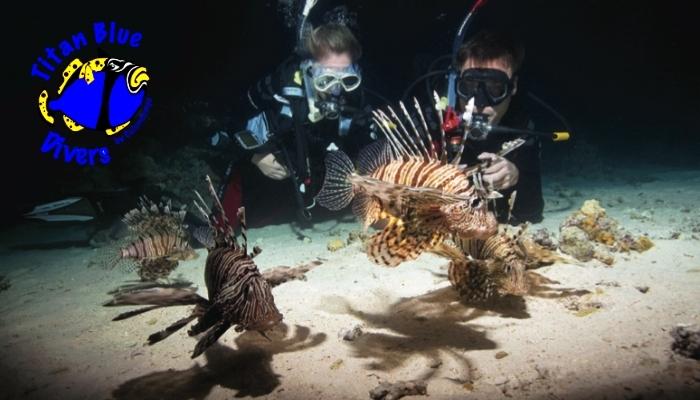
Night diving is a fantastic and very fun experience if you take all your precautions. For this reason, don’t limit yourself—just educate yourself and don’t stop enjoying this wonderful modality.
That’s all for now. But remember that if you have any questions or if you want us to clarify any doubts, leave your comment and we will answer you in a heartbeat.
And if what you want is to be part of this incredible experience, you can go diving in Lanzarote with us, where you will find magical places with the best professionals like those at Titan Blue Divers.


