Can’t Equalize Your Ears While Scuba Diving? Try This First

Did you just get out of the water and your ear is still blocked? First off, know that you’re not alone. It’s one of the most common issues after a dive. If you’re looking for how to equalize your ears in scuba diving, you’ll find several quick solutions right here.
You’ll learn which maneuvers work, what to avoid so you don’t make it worse, and why your ears sometimes take a while to clear…
What to Do If Your Ear Stays Clogged After Diving
- Start with simple movements
Try this (without forcing anything):
- Swallow several times in a row.
- Yawn or mimic a yawning motion.
- Move your jaw forward and side to side, very slowly.
- Stay standing or sitting upright with your head held straight.
These small actions help the Eustachian tubes (which are what get clogged in these cases) open up without extra pressure.
- Gentle maneuvers you can try
If the blockage is still there, try one of these options, but always do it gently:
• Toynbee maneuver (very gentle):
- Pinch your nose shut and swallow.
⚠ (It should never hurt at any point).
• Slow, deep breathing: Sometimes your ear just needs a few quiet seconds to balance out on its own.
🚫 IMPORTANT: What you should NOT do
Completely avoid anything that could make the sensation worse:
- Don’t blow hard with a forceful Valsalva (the typical hard-blowing maneuver).
- Don’t shake your head trying to pop your ear.
- Don’t squeeze your nose too hard when trying to equalize.
- Don’t force any maneuver if you feel pain.
If it hurts, stop. Always.
Signs you should take a break
If you notice any of these sensations, it’s best to stop and let your body sort itself out:
- Sharp, stabbing pain.
- Dizziness or feeling slightly off-balance.
- A feeling of pressure that builds up instead of easing off.
Other Maneuvers You Can Try if Your Ear Is Still Blocked…
If your ear hasn’t cleared, you can try a few slightly more specific techniques:
Lowry Maneuver
- Pinch your nose shut.
- Close your mouth.
- Blow very gently while swallowing at the same time.
This works because it combines two movements that help open the Eustachian tubes simultaneously.
Edmonds Maneuver
- Push your jaw forward (like when you yawn).
- While holding that position, try a gentle exhale with your nose pinched.
Increase airflow without pressure
Sometimes you don’t even need a fancy maneuver. Something as simple as:
- taking a deep breath,
- exhaling through your nose very slowly,
- keeping your head straight…
…just this can help your ear get back to normal.
Apply gentle external heat
It’s not an equalization technique, but it’s a helpful trick.
A warm towel over your ear can help relax the tissues and make it easier for the canal to open up.
(Never use excessive heat, and never apply pressure).
Keep this in mind while you try…
- If any maneuver hurts, stop.
- If you feel dizzy, don’t push it.
- Sometimes your ear will clear after just resting for a few minutes.
This is something even experienced divers practice, and it usually gets easier with training.
If your ear still feels the same after trying these techniques, it helps to understand what’s causing that blockage and why it happens right after diving…
Why Does Your Ear Stay Blocked After a Dive?
At this point, it’s completely normal to want to know why your ear won’t pop.
It’s not always serious; in fact, there are usually pretty common reasons behind that feeling:
Pressure changes in the first few meters
Most of the work of equalizing happens right near the surface, at the very beginning of your descent.
If something caught you off guard—a sudden move, a distraction, or dropping down faster than usual—your ear can fall behind and take longer to balance out after the dive.
A bit of congestion you didn’t notice before diving
It could be allergies, mild mucus, or even a sudden temperature shift.
That small detail is enough to keep your ear from clearing right away once you’re out of the water.
Fast descents or equalizing “late”
You don’t need to feel pain for your ear to be slightly stressed.
If you equalized later than you should have, it’s common to feel residual pressure or fullness afterward.
How to Keep It from Happening Again
Now that you know why your ears might feel blocked when scuba diving in Lanzarote, having a simple routine can help keep it from happening next time.
You don’t need anything complicated—just build in a few easy habits before and during your dive.
Stay well hydrated before you dive
It might seem like a small detail, but hydration affects tissue elasticity and how your Eustachian tubes perform.
A well-hydrated body usually equalizes much more easily.
Keep your airways as clear as possible
- Avoid diving if you recently had a cold.
- Watch out for allergies or sudden temperature changes.
- If you notice mucus or nasal congestion, remember that it will affect your ability to equalize, too.
Equalize before you feel the pressure
The critical zone is in the first few meters.
Equalizing proactively, even before you feel any pressure building up, can completely prevent that post-dive clogged feeling.
Do it every few seconds during your descent, smoothly and without forcing it.
Descend at a pace that works for your body
Try dropping down a bit slower at the start, give your body time to adapt, and don’t ignore minor discomfort.
Listening to your body is one of the best ways to prevent issues.
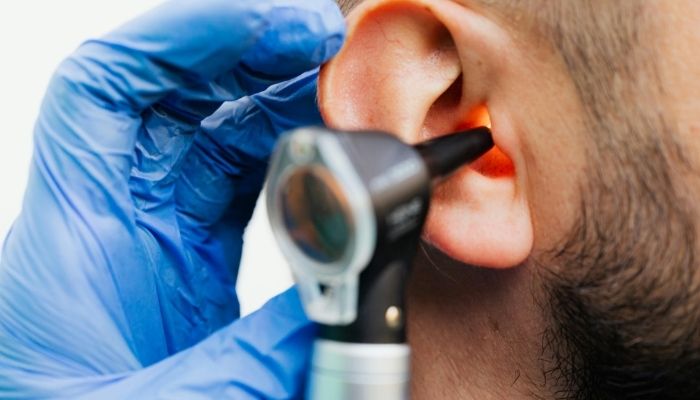
When Should You See a Specialist?
Most ear blockages clear up on their own, but in some situations, it’s best to get a medical opinion to avoid complications.
See a doctor if you notice:
- Severe pain or pain that gets worse over time
- A feeling of pressure that doesn’t improve after a few hours
- Hearing loss or persistent muffled sound
- Dizziness, vertigo, or loss of balance
- Discharge, swelling, or any sign of infection
- Or if your ear is still completely blocked after several days
These are warning signs that your ear needs to be checked out to rule out any further issues.
________________________________________________________________
Ending up with a clogged ear after diving is more common than you might think, and most of the time it resolves with time, patience, and the right techniques. The key is never to force it, listen to your body, and adopt habits that make equalizing smoother on every single dive.
With practice and good routines, equalizing becomes second nature. And once you understand how your ears react, every descent will feel more comfortable, safer, and a lot more fun.


