
Wreck Diving - Where and How to Do It?
Wreck diving is the best way to uncover the most interesting mysteries and stories that have rested on the seabed for decades.
Plus, it’s an epic experience that you definitely must have if you’re an adventurous diver looking for fantastic encounters with the friendliest and most curious marine species that have found a home in these vessels of yesteryear.
But what exactly awaits you when diving in sunken ships? What should you keep in mind, and where can you start your underwater journey?
We’ll answer all of that in this post. Join us!
What are Wrecks and Why are They So Important?
Wrecks are much more than just sunken ships resting on the seabed. They are iconic pieces that encapsulate ancient stories beneath the waves.
These fascinating underwater relics are considered true treasures for lovers of marine life and adventure. Each wreck tells a unique story, from ancient galleons that sailed loaded with riches to modern warships that witnessed epic battles.
Daring to unravel the mysteries of these shipwrecks allows us to take a trip back in time and connect with history. But that’s not all! They also offer a sanctuary for marine life to thrive for decades, while sparking our adventurous spirit on every dive.
And there’s even more. In the following sections, you’ll discover the types of wrecks you can explore, where to find them, and how to prepare for the dive.
What Types of Sunken Ships Can You Dive In?
Wrecks can be classified into different categories based on their era, purpose, and characteristics. Among the most common types of sunken ships you can venture into are:
- Powerful Galleons: These majestic vessels were warships or treasure transports used by great maritime powers in centuries past. Once inside, you’ll unravel history from its epicenter and take a journey to remote times filled with epic feats and conflicts.
- Cargo Ships: From merchant ships to barges, these vessels transported goods and supplies between different ports, contributing to global trade and expansion during decades full of challenges.
- Military Ships: Warships, such as battleships and submarines, have played leading roles in armed conflicts and, at times, have found their fate at the bottom of the sea after historic battles.
- Fishing Boats: These are vessels used for fishing, from small boats to large trawlers, which can also become wrecks and provide a haven for marine life. In them, you can spot a wide diversity of species that will make your journey even more special.
Why Go Wreck Diving?
Wrecks are not only a window into the past, but they also play a crucial role in preserving marine life and ecological balance. Over time, these shipwrecks become artificial reefs, providing a safe habitat for a wide variety of marine species.
Additionally, the remains of these ancient ships offer underwater archaeologists a unique opportunity to unravel the history of navigation, trade, and warfare.
Each find in a wreck is like one more piece in a historical puzzle, allowing us to reconstruct the past and better understand how our lives are intricately intertwined with the oceans.
But the story doesn’t end here.
Wrecks also play a relevant role in sustainable tourism, as they attract divers from all over the world who want to experience the thrill of discovering submerged history.
However, it is important to highlight the need to dive responsibly and with respect for these historical sites and vulnerable ecosystems, ensuring we do not cause damage and preserve them for future generations. We will talk more about this later.
Best Wrecks in Lanzarote for Diving
In Lanzarote, we can explore several sunken ships full of mysteries and adventures.
From Puerto del Carmen to Arrecife, you can dive into wrecks full of coral, impressive marine life, and surprising stories.
Below, we tell you what they are, how to get to them, and what kind of adventure awaits you:
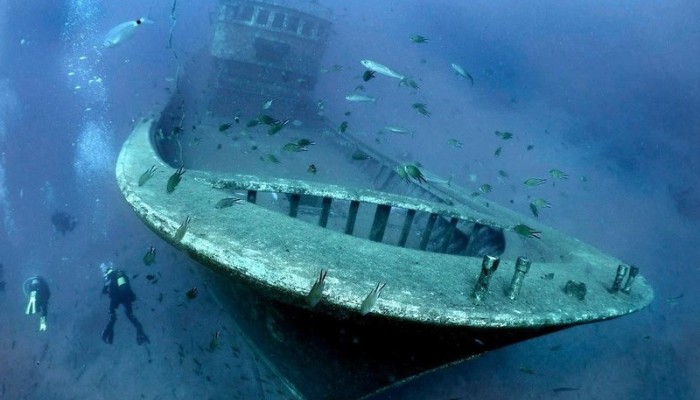
Puerto del Carmen Wrecks
If you want to visit a true epicenter of sunken ships in Lanzarote, Puerto del Carmen is the ideal destination.
On your dive, you can discover the mysteries of up to 6 different wrecks, each with a highly interesting past.
The best part is that it’s an adventure suitable for intermediate or advanced divers. You’ll find an imposing metal vessel and 5 wooden fishing boats.
The deck of the first wreck can be found at a depth of about 12 meters (40 feet), making it a great option for less daring divers.
The Propeller (La Hélice) is the biggest challenge, with a depth of nearly 40 meters (130 feet) to spot this piece which is still in good condition, along with the metal rudder.
The marine life we can find in this shipwreck is absolutely impressive.
Just during the ascent to the deck, we’ll have the chance to observe schools of barracuda, while on the volcanic rock wall next to the hull, we’ll see a cave packed with yellow and white sponges.
But that’s not all; during the exploration, you’ll be surprised by alfonsinos, scorpionfish, and even bigeyes. Even hidden in the sand, you’ll see angel sharks, stingrays, torpedo rays, eagle rays, and butterfly rays.
The best part is that to see it for yourself, you just have to book your guided Lanzarote diving experience with Titan Blue Divers. 😉
⚓ DEPTH: 12 – 40 meters
🚢 BOAT ACCESS: Yes
⏫ LEVEL: Intermediate

Quíquere Wrecks - Puerto del Carmen
The turquoise waters of the Quíquere ravine are the perfect setting for this shipwreck site. You’ll explore 3 wooden fishing boats that ended up at the bottom of the sea during the last century and, paradoxically, ended up serving as a home to those who were once their prey.
Between 20 to 28 meters (65-90 feet), you’ll find the first two boats almost intact. You can access them by descending the cliff stairs to the shore and diving perpendicular to it.
However, to reach the third wreck, it’s recommended to do so from a boat, as it’s not only deeper (around 30 meters/100 feet) but also quite far from the first two.
Now, this last one is the most attractive challenge of the entire dive at the Quíquere wrecks, as it awaits us with a mysterious look (some even call it ghostly) and a true treasure of marine diversity, from friendly angel sharks to eagle rays and stingrays.
⚓ DEPTH: 10 – 30 meters
🚢 BOAT ACCESS: Yes
⏫ LEVEL: Beginner
📌IMPORTANT: Pay closer attention than ever to your dive computer because you’ll likely need a decompression stop.

El Rabat Wreck - Arrecife
If you want to explore a real sunken ship in depth, El Rabat is waiting for you. At nearly 20 meters (65 feet) deep, this vessel in excellent condition will allow you to access its interior and tour what used to be the engine room, part of the holds, or the bridge. You’ll even see the port side if you descend to about 32 meters (105 feet).
It is located off the coast of Arrecife, and to get there, we only need to travel 5 minutes by boat from the port. It is one of the most famous wrecks in the Canary Islands, having sunk over 20 years ago off the coast of Lanzarote while bound for the African coast.
In addition to the possibility of unraveling the mysteries of this shipwreck from the inside, you can also make your experience even more special with fantastic encounters with charming barracudas, stingrays, angel sharks, and large amberjacks (up to over 2 meters/6 feet).
⚓ DEPTH: 18 – 34 meters
🚢 BOAT ACCESS: Yes
⏫ LEVEL: Intermediate – Beginner
How to Prepare for Wreck Diving?
Necessary Equipment for Wreck Diving
The first step for your adventure is having the right equipment; this way, you’ll guarantee an experience that is as safe as it is memorable.
In this section, you’ll learn about the basic and advanced equipment you need to explore the sunken treasures beneath the sea, as well as some key considerations for your safety:
- Mask: A good mask will provide you with a clear, leak-free view, allowing you to appreciate the details of the wrecks and the surrounding marine life.
- Fins: Fins will help you move more efficiently underwater and allow you to save energy during dives.
- Wetsuit: Depending on the water temperature, choose a wetsuit that keeps you comfortable and protected throughout the experience.
- Buoyancy Control Device (BCD): The BCD allows you to control your buoyancy and maintain a proper position during the dive to appreciate every detail of the wreck while maintaining neutral buoyancy.
- Regulator: It is essential for breathing underwater. Make sure you have a reliable regulator that provides air safely and consistently.
- Scuba Tank: Choose a tank with the appropriate capacity for your dives and ensure it is in optimal condition and filled with clean air.
- Dive Computer: A dive computer will help you monitor depth, dive time, and decompression limits, ensuring a safer experience.
- Dive Light: To explore the dark corners of the wrecks and discover hidden details, a powerful flashlight is a must.
- Photo or Video Gear: If you want to capture underwater treasures and share your adventure with others, consider bringing a waterproof camera.
Safety Measures Needed for Diving in Sunken Ships
- Planning and Knowledge: Research the wreck you’re going to explore beforehand; know its depth, currents, and potential hazards to plan a safe dive.
- Specialized Training: Get a scuba certification and consider taking specialized wreck diving courses to acquire the necessary skills.
- Dive in Buddy Pairs or Groups: It is always safer to dive with a buddy or in a group, as they provide mutual support and help in case of an emergency.
- Respect for the Marine Environment: Do not touch or remove objects from the wrecks, and ensure you do not cause damage to the marine life and the fragile ecosystem surrounding them.
- Communication and Signaling: Establish clear dive signals with your buddy and carry signaling devices like a surface marker buoy.

Recommendations to Protect the Marine Environment During Your Dive
- Avoid Touching and Removing: When wreck diving, let’s resist the temptation to touch or take souvenirs from the site. Submerged objects are an integral part of the historical heritage and the ecosystem, so handling them can cause irreparable damage. It’s better to take the great experience or a nice photo as souvenirs.
- Always Maintain a Respectful Distance: Observe marine life from a safe distance and avoid getting too close or disturbing the animals.
- Do not feed the species you may spot: Although it may seem unnecessary to mention, it’s always worth saying: feeding fish alters their natural behavior and is harmful to their health.
- No collecting marine organisms: Let corals, shells, and other marine organisms stay in their place, as they are essential for the balance of the ecosystem.
That’s it for our post about the wreck diving experience. We hope you feel better informed for your journey and that you can live it to the fullest.
Remember that at Titan Blue Divers, we are ready to be your partners in adventure, so if you want to make the most of your dive and enjoy as many attractions as possible, send us a WhatsApp!


